WONDER five years on – making a change for a better future.
December 18, 2025 | WONDER | 5 minute read
In 2020, Holkham created a sustainability and conservation strategy, WONDER, with three objectives designed to improve its practices and protect the environment; to pioneer environmental gain, to champion low carbon living, and to tread lightly and stamp out waste. In this journal, Sustainability Manager Sue Penlington and General Manager of Holkham Farming Company James Beamish, look back on the progress over the five years and next steps.


Coke of Norfolk played a huge role in the Agricultural Revolution in the 18th century to improve Holkham’s soil health and protect the land. The same rationale is at the centre of our WONDER strategy, launched in 2020 to improve the estate’s environmental impact and become carbon negative by 2040.
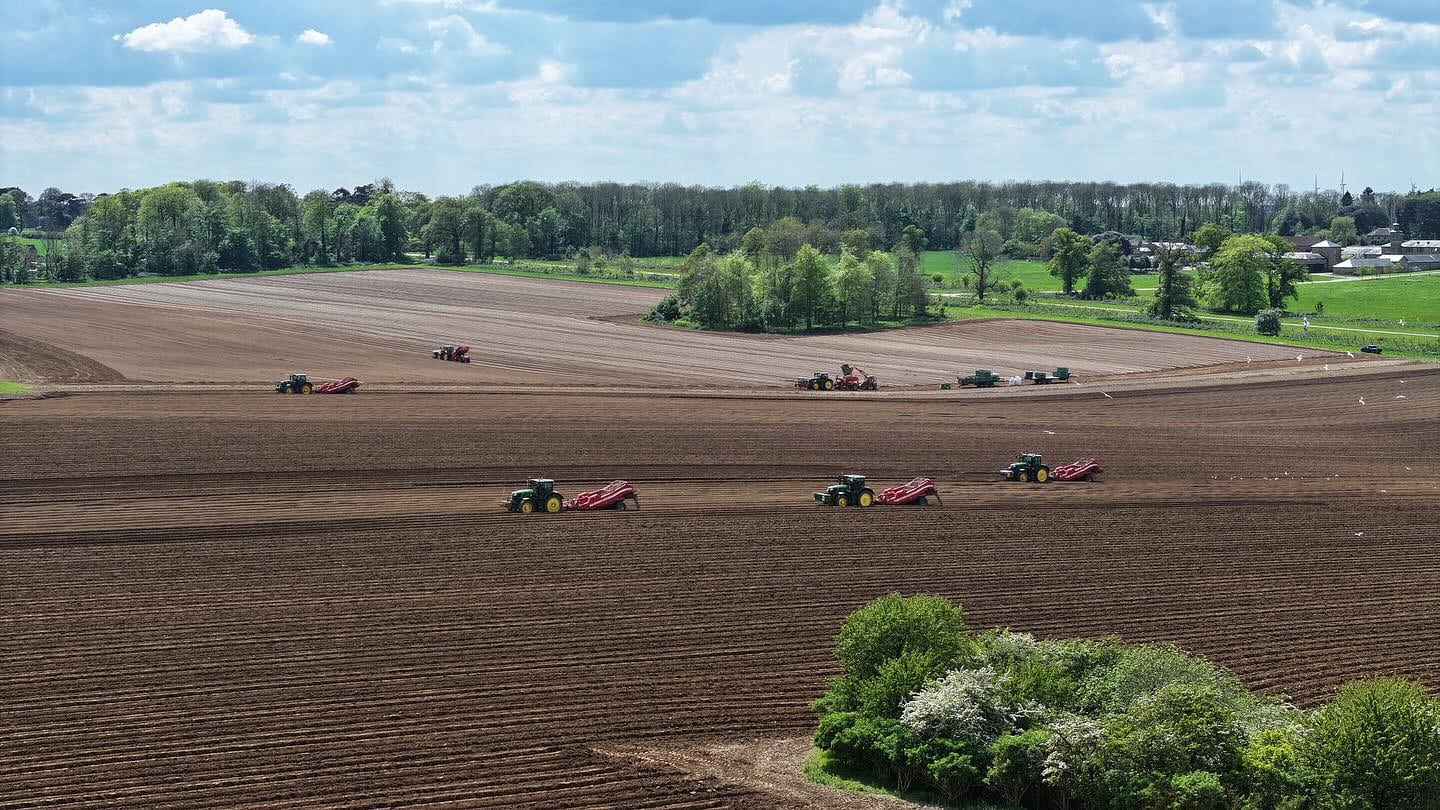
Baseline carbon audits were conducted in 2020, with annual audits conducted each year since. Following analysis of the data and progress, 12 projects were selected at the beginning of 2025. Improvements have been made in each of the estate’s businesses, but there is more to be done, particularly in the production of nature friendly, low-carbon food.
“We need to reduce our use of carbon with efficient machinery, targeted use of artificial fertiliser and increased use of organic manure and legumes,” says Sue Penlington, Sustainability Manager.
“Farming is complex and decisions are interrelated. For example, oilseed rape has a relatively high carbon footprint. However, it has benefits as a break crop, which reduces pests and disease in the soil. Similarly, our cattle produce methane, yet they are a crucial link in the carbon cycle, manage the landscape and the organic manure they emit helps to reduce our use of artificial fertiliser. Our target is to reduce carbon emissions by 50 percent on our trial plots within Park Farm.” “We need to balance the requirements of nature with the need for financially viable food production,” says James Beamish, General Manager of Holkham Farming Company.
“We have trialled low carbon fertilisers, but these cost more than conventional products and are not available at scale. We are building our knowledge with trials to become more efficient with our use of fertiliser. The industry is working to address the issues, but it will take time to implement change while ensuring food is affordable.” says James Beamish, General Manager of Holkham Farming Company.

From an initial audit to create a baseline, we effected positive change in three key areas. Here are some of the achievements of the first five years, with plans for future improvement.
Setting a benchmark to measure change.
The starting point
Two carbon audits were undertaken in 2020. The Carbon Trust measured the direct and indirect emissions of our leisure and property businesses; Argrecalc audited that carbon emissions of its agricultural and land-based businesses, along with its carbon sequestration through trees and soil.
These audits established a baseline footprint of, direct emissions (Scope 1 and 2) 8,742 tonnes CO2e, sequestration, 20,500 tonnes CO2e and indirect emissions (scope 3) 32,500 tonnes CO2e.
Goal 1: Pioneering environmental gain. Our goal is to increase natural capital each year with every decision made.
In 2020 the initial challenge was to define and measure natural capital achieved with development of the WONDER Wheel. And in 2024 we surveyed 20 sites and baselined and 500 hectares.
Growing natural capital
Extended use of the WONDER Wheel to enable calculation of natural capital on a farm scale and established Monica’s meadow, a five year field regeneration project.
Next steps – Exploring technology to enable other land managers to measure their natural capital.
Goal 2: Championing low carbon living – Our aim is to be a carbon negative estate by 2040
In 2020 we measured 8,742 tonnes of Co2e. in 2024 we had 25%reduction in leisure, property and conservation emissions and a 17% reduction in farming emissions, which combine to a 21% total reduction.
100% or estate electricity come from renewable sources, 100,000 kWh were created by our solar panels, we installed 17 air source heat pumps and used lower Carbon HVO fuel by the Landscape Team.
Next steps – Reduce emissions of Holkham Farming Company and increase solar and electric vehicle fleet.
Goal 3: Treading lightly and stamping out waste – Our aim is to reduce non-recycled waste by 10% each year for the next 10 years.
In 2020 we produced 662 tonnes of non-recyclable waste – only 23% recycled and in 2024 we produced 358 tonnes of non-recyclable waste – 68% recycled!
We established Norfolk’s first compostable waste collection from Holkham’s Cafés in 2022 and this was extended to Pinewoods in 2024. We increased separation with new waste stations and invested in a briquette machine at Longlands Joinery Workshop and industrial waste separation.
Next steps – Improve waste separation levels at Pinewoods and Wells Beach.
We are delighted with the progress we have made so far and looking forward to continue to make a difference over the next five years and beyond.
Back to Journal Back to Journal